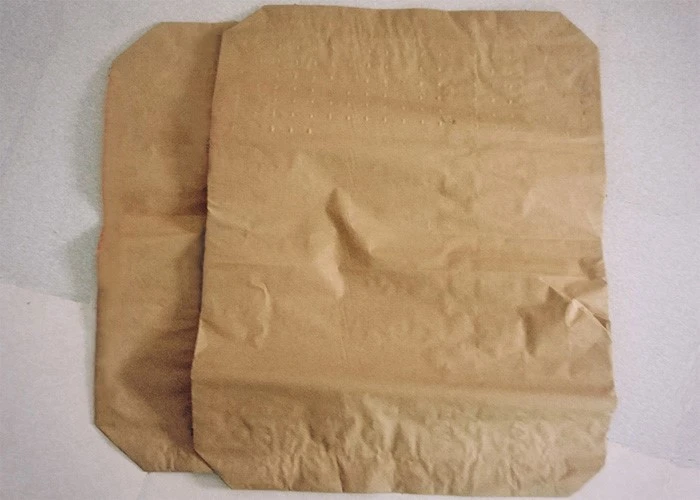

Regulations for kraft paper cement sacks vary by region, focusing on mechanical performance, safety, environmental compliance, and recyclability. Below are key requirements for major markets:
European Union (EU)
Core Standards & Directives
- PPWR (EU 2025/40) Packaging & Packaging Waste Regulation
- Recyclability threshold: ≥70% by 2030; ≥80% by 2038.
- Cement sacks (including multi‑wall kraft) must be compatible with standard paper recycling systems.
- EUDR (Deforestation‑Free Regulation)
- Kraft paper must come from zero‑deforestation sources (post‑2020‑12‑31).
- Mandatory due diligence, traceability, and geographic sourcing records.
- Packaging Directive 94/62/EC
- Heavy metals (Pb+Hg+Cd+Cr⁶⁺) ≤ 100 mg/kg total.
- Paper recycling target: 60% by weight.
- EN Standards
- EN 1086‑1/‑2: Multi‑wall paper sacks for cement (strength, drop test, sift‑proofing).
- EN 643: Recycled paper grades for sack production.
- Material & Construction
- Typically 3–5 plies of sack kraft paper (80–120 g/m² per ply).
- Water‑resistant coatings/barriers for outdoor storage; seams must be sift‑proof.
United States
Federal Regulations (DOT 49 CFR 178.521)
- UN 5M1 / 5M2 classification for cement sacks:
-5M1: Multi‑wall kraft (≥3 plies), max 50 kg; seams sift‑proof.
- 5M2: Water‑resistant version (4+ plies with barrier or 3‑ply with outer water‑resistant ply); seams waterproof.
- Materials: Must use suitable kraft paper with specified tensile/burst strength.
State & Environmental Rules
- TPCH (Toxics in Packaging Clearinghouse)
- Heavy metals ≤ 100 ppm total; PFAS/phthalates restricted (≤100 ppm).
- Compliance declaration (CoC) required for interstate commerce.
- ASTM Standards
- ASTM D7238: Test methods for multi‑wall paper sacks.
- ASTM D3985: Water vapor transmission rate (WVTR) for barrier layers.
China
National Standard GB/T 9774‑2020 (Cement Packaging Bags)
- Material specs for kraft paper sacks
- Basis weight: ≥ 75 g/m² per ply; total ≥ 225 g/m² for 3‑ply.
- Tensile load (warp): ≥ 500 N; bursting strength ≥ 850 kPa.
- Max capacity: 50 kg; temperature resistance ≤ 80°C.
- Environmental
- Prohibits PVC coatings; promotes recycled fiber (≥20% in many regions).
- Heavy metals ≤ 100 mg/kg (aligned with EU/US).
- Related standards
- GB/T 24287: Extensible sack kraft paper.
- GB/T 7968: Paper sacks general technical rules.
Japan
JIS Standards
- JIS Z 1505: Kraft paper sacks for cement (construction, strength, drop test).
- JIS R 5210–5214: Portland cement packaging compatibility.
- Environmental
- Recycling rate target: 60% for paper packaging.
- Restrictions on heavy metals and hazardous coatings.
Southeast Asia (Indonesia, Thailand, etc.)
- Indonesia (SNI 8053.2:2015)
- Specifies basis weight, thickness, bursting/tensile strength, and moisture resistance for cement sack kraft.
- Mandates labeling and quality inspection protocols.
- South Korea (KS T 1065‑2015)
- Sewn kraft paper sacks for cement: ply count, strength, drop‑test performance, and sift‑proofing.
International Benchmarks (ISO)
- ISO 187: Conditioning for paper testing.
- ISO 536: Grammage (basis weight) measurement.
- ISO 1924‑2: Tensile strength of paper.
- ISO 2758: Bursting strength of paper.
- ISO 6590‑1: Packaging-sacks-vocabulary and types.