

1. Product brief introductions:
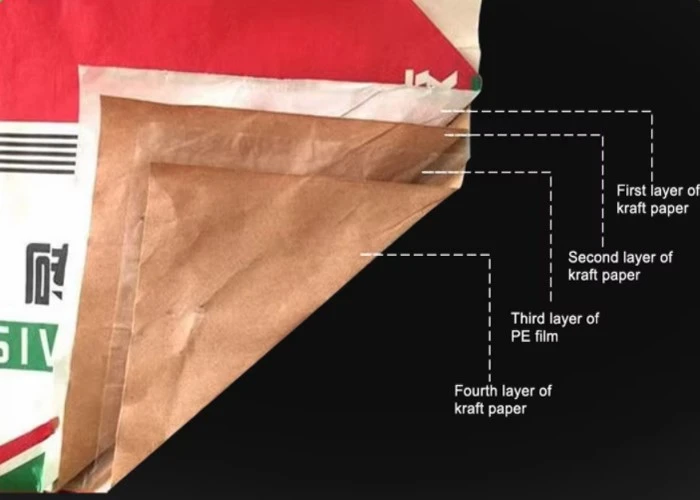
Kraft paper plastic composite bag is a laminated packaging material with two core layers: an outer natural kraft paper and an inner waterproof PE plastic film. Sometimes, more layers will be made according to the customization.
• The kraft paper layer offers high tensile strength, printability for logos and product info, and a natural, eco-friendly look.
• The plastic lining provides moisture-proof, dust-proof and leak-proof barrier functions to protect powder, grain and chemical raw materials.
• Widely used for flour, rice, fertilizer, mortar, and industrial granular materials. It is reusable under intact, dry conditions but has limited service cycles due to paper-plastic lamination.
2. Product specifications and materials:
Product Name: Paper Plastic Composite bag
Origin: China
Material: kraft paper/PE/PP
Feature: Recyclable/biodegradable/durable
Color: Natural kraft color
Layers:2~4layers or customized
Paper Type: Kraft Paper
Usage: Industrial products/agricultural products/ chemicals/Logistics packaging/Pet food, etc
Top type: Valve/stitching
Capacity:25kg/50kg or customized
MOQ: 5000pcs
Lead time: About 15days
Printing: Customized
3. The following are the operation methods of Properly Clean Kraft Paper Plastic Composite Bags for Reuse:
01
Pre-Cleaning Preparation Rules
- Confirm the bag is undamaged: No holes, delamination, mildew or torn kraft paper. Discard broken bags directly as they cannot be safely reused.
- Empty all residual contents completely: Shake out powder, granules, or debris; tap the bag upside down to remove stuck residues inside.
- Classify by stored goods: Bags holding chemicals, oil, or damp corrosive materials are not allowed to be cleaned for reuse. Only bags for dry, non-toxic solid particles can be cleaned.
- Choose a cool, dry, well-ventilated cleaning area; avoid direct sunlight during the whole process.
02
Dry Cleaning (Recommended for Most Dry Powder Bags, First Priority)
This method protects paper-plastic lamination and prevents water damage to the outer kraft paper.
- Turn the bag inside out gently to expose the plastic inner film.
- Use a soft dry brush or lint-free dry cloth to wipe away dust, fine powder, and surface residues.
- For lightly sticky dry residues: Blow off dust with a low-pressure cold-air blower; do not scrape hard to avoid scratching the plastic film.
- Wipe the outer kraft paper surface with another clean, dry cloth to remove surface dirt and printing abrasion dust.
- Shake the bag repeatedly to clear all loose dust before drying.
03
Mild Damp Wiping (Only for Slightly Stained, Non-Oily Bags)
Water immersion is strictly forbidden, as soaking will soften kraft paper and cause paper-plastic delamination.
- Dampen a microfiber cloth with a tiny amount of clean, cold water only. No detergent, bleach, alcohol, or chemical cleaners.
- Squeeze the cloth tightly until no water drips out-only a slightly moist surface is allowed.
- Wipe the plastic inner lining gently in one direction to remove light stains. Do not rub back and forth fiercely.
- Wipe stained spots on the outer kraft paper lightly with the same damp cloth; stop immediately if the paper turns soft or wrinkly.
- Never pour water directly into the bag or submerge the whole bag.
04
Complete Drying Step (Critical Before Reuse)
Moisture will cause mildew, degumming, and paper brittleness, so full drying is mandatory.
- Flip the bag inside out and unfold it fully to maximize air contact.
- Hang it in cool shade with good air circulation; keep away from sun, heaters and high-humidity spaces.
- Air-dry naturally until the inner plastic film and outer kraft paper are 100% dry (usually 4–12 hours depending on ambient humidity).
- Do not use hair dryers, ovens or other heat sources-high heat melts the plastic film and separates the lamination.
- Check for hidden damp corners (bag bottom, sealed edges). If any dampness remains, extend the air-drying time.
Strict Cleaning Prohibitions:
1. Do not soak, wash with running water, or machine wash.
2. Do not use soap, disinfectant, solvent, or strong cleaning agents.
3. Do not scrub roughly with hard brushes that puncture plastic film.
4. Do not dry under direct sunlight or in a high-temperature environment.
5. Do not clean bags that previously held oil, chemicals, wet food, or sharp materials for secondary reuse.